Source sinotruk howo common rail injector for heavy trucks, engines, and repairs
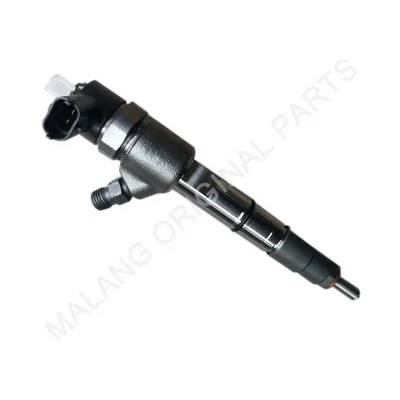
Find 30 listings for the sinotruk howo common rail injector suitable for heavy truck applications and engine repairs. Buyers can compare specifications, prices, and certifications from multiple suppliers to identify the best fit for their needs.
Key considerations
Products List




Comprehensive Sourcing Guide
Sinotruk Howo Common Rail Injector Sourcing Guide
Sourcing replacement fuel injectors for Sinotruk Howo heavy-duty trucks requires a disciplined approach to part identification and supplier verification. The common rail system is a critical component of the engine’s performance, and incorrect parts can lead to severe operational failures. Buyers must navigate a market that offers both original equipment manufacturer (OEM) parts and alternative options, each with distinct implications for vehicle longevity and maintenance costs. This guide provides a structured framework for evaluating listings, verifying technical specifications, and ensuring commercial reliability when procuring these essential engine components.
The procurement process begins with understanding the specific model variations and part numbers associated with the Sinotruk Howo platform. Listings often display multiple model codes, such as VG61540080017A, VG1540080017A, and R61540080017A, which may correspond to different engine configurations or production years. Additionally, part numbers like 0445110454 and 0445120048 are frequently cited in supplier catalogs. Buyers must cross-reference these identifiers with their vehicle’s service manual or existing part labels to ensure compatibility. Relying solely on the generic "Sinotruk" or "Howo" label without verifying the specific part number is a common pitfall that can result in ordering incompatible injectors.
Product Scope and Observed Listing Signals
The current market for Sinotruk Howo common rail injectors presents a wide range of product attributes that buyers must interpret carefully. Observed listings indicate a price range of $1 to $200 USD, which reflects the significant variance between original and alternative parts. Minimum order quantities (MOQ) typically range from 1 to 20 pieces, allowing for flexible procurement of single replacements or bulk fleet repairs. Suppliers often highlight customization options, with packaging available in standard cartons, wooden cartons, neutral boxes, or plastic bags. These packaging variations can impact shipping costs and product protection, so buyers should specify their preference during the inquiry phase.
Product condition and quality claims are central to the observed listing signals. Most suppliers describe their injectors as "New" and offer both "Original" and "Alternative" quality grades. The material is consistently identified as steel, with a production process involving casting and forging. Some listings specify a weight of 0.8 kg or a gross weight of 3.000 kg per package, which includes the single package size of 28x21x15 cm. Buyers should treat these attributes as observations from specific listings rather than universal standards for all injectors. It is crucial to confirm the exact weight and dimensions for the specific part number being ordered, as variations in packaging or included accessories can affect these figures.
Technical Specifications to Verify
Verifying technical specifications is the most critical step in preventing installation errors. The core keyword "Sinotruk Howo common rail injector" encompasses a variety of models, and buyers must match the supplier’s model number to their truck’s engine type. For instance, the model VG1096080010 and Vg1560080276 may apply to different engine series within the Howo lineup. Buyers should request detailed technical datasheets that confirm the injector’s flow rate, spray pattern, and electrical resistance values. These parameters are essential for ensuring the injector integrates seamlessly with the truck’s electronic control unit (ECU).
Physical dimensions and connection types must also be verified against the existing unit. Listings may describe the product as having a "Double Deck" configuration or specific color codes like gray or black, which can serve as visual identifiers. However, visual inspection alone is insufficient. Buyers should compare the mounting flange shape, connector pin layout, and thread specifications with the original part. If the supplier offers "Normal or Customized" sizes, it is imperative to provide exact measurements or photographs of the old injector to avoid receiving a part that does not fit physically. This verification step minimizes the risk of costly returns and installation delays.
Compliance and Safety Documentation
Compliance and safety documentation provide assurance that the injectors meet recognized quality management standards. Many suppliers in the Shandong and Jinan regions of China cite certifications such as ISO9001, ISO/TS16949, and ISO. These certifications indicate that the manufacturing facility adheres to specific quality management systems, which is a positive indicator for consistency and reliability. However, buyers should verify the validity of these certificates and ensure they cover the specific product line being purchased. Certification alone does not guarantee the performance of an individual injector, but it suggests a controlled production environment.
In addition to manufacturing certifications, buyers should inquire about testing procedures and warranty terms. The observed listings mention an after-sales service of "Online Guidance" and a warranty period of 3 to 6 months. This warranty coverage is a standard commercial term that protects the buyer against early failures. Buyers should clarify whether the warranty covers labor costs for installation or only the replacement of the part itself. Furthermore, while some background information mentions CE certification, this is not explicitly confirmed in the high-confidence facts for all products. Buyers should request specific test reports or performance data if their fleet operations require strict adherence to international safety standards.
Cost Drivers and Commercial Terms
Understanding the cost drivers helps buyers make informed decisions between price and value. The primary factor influencing price is the quality grade: original OEM parts command a premium, while alternative parts offer a lower cost entry point. The observed price range of $1 to $200 USD reflects this spectrum. Buyers should consider the total cost of ownership, which includes potential downtime and fuel efficiency impacts. A cheaper injector that fails prematurely or causes poor engine performance can be more expensive in the long run than a higher-quality alternative. Suppliers often market their prices as "Competitive," but buyers should request detailed quotations that break down unit costs, shipping fees, and any applicable taxes.
Commercial terms such as payment methods and delivery times are also key considerations. Suppliers typically accept T/T, L/C, MoneyGram, and Western Union, providing flexibility for different transaction sizes. The delivery promise of "Stock and Fast" suggests that many suppliers maintain inventory for immediate shipment, which is crucial for minimizing truck downtime. However, buyers should confirm the actual lead time for their specific order, especially if custom packaging or specific model numbers are required. The availability of free samples is another commercial term that can help buyers verify quality before committing to a larger order, although this is subject to supplier policy.
Supplier Qualification and Quality Control
Supplier qualification involves assessing the manufacturer’s or wholesaler’s capability to deliver consistent quality. The marketing type is listed as "Manufacturer, wholesaler," indicating that some suppliers are direct producers while others are distributors. Buyers should prioritize suppliers who can provide evidence of their production capabilities, such as photos of the casting and forging processes. The origin of the products, primarily Shandong and Jinan, China, is a known hub for heavy truck parts, but buyers should still conduct due diligence on the specific entity. Checking the supplier’s business license and years in operation can provide additional confidence in their stability.
Quality control measures should be explicitly discussed during the procurement process. Buyers should ask about incoming material inspections, in-process quality checks, and final testing procedures. Since the injectors are engine parts, precision is paramount. Suppliers should be able to describe how they ensure that each injector meets the specified tolerances. The offer of "Online Guidance" for after-sales service is a valuable support mechanism, but it should be complemented by a clear defect resolution process. Buyers should establish a protocol for handling non-conforming goods, including return procedures and credit issuance, to protect their investment.
Long-Term Procurement Checks
Long-term procurement success depends on establishing a reliable supply chain and continuous performance monitoring. Buyers should start with small trial orders to evaluate the injector’s performance in real-world conditions. This approach allows for the assessment of fuel efficiency, engine smoothness, and durability over time. Consistent performance across multiple units indicates a reliable supplier, while variability suggests quality control issues. Buyers should maintain detailed records of part numbers, supplier performance, and failure rates to inform future purchasing decisions.
Building a relationship with a qualified supplier can lead to better pricing, priority delivery, and improved technical support. Regular communication with the supplier about fleet needs and any emerging issues can help in anticipating supply chain disruptions. Buyers should also stay informed about updates to Sinotruk Howo models and injector specifications, as technology evolves. By maintaining a disciplined approach to verification and quality assessment, buyers can ensure that their fleet remains operational and efficient, minimizing the risks associated with aftermarket parts procurement.
FAQs
What is the product name and application for this injector?
The product is a truck common rail engine fuel injector designed for heavy truck applications. It is specifically compatible with SINOTRUK models and serves the purpose of replacement or repair for existing engine systems.
Which certifications do the manufacturers hold for these parts?
Manufacturers hold ISO/TS16949, ISO9001, and ISO certifications for quality assurance. These standards ensure the parts meet industry requirements for production and safety in the heavy truck component sector.
Can I order a single piece with fast delivery from stock?
Yes, the minimum order quantity is one piece, and delivery is available from stock for fast shipping. The product is listed as new condition with a competitive price and immediate availability options.
What are the available customization options for packaging and model?
Customization is available for packaging, which can be standard, carton, wooden, or neutral boxes. Model numbers vary, including VG1540080017A and 0445110454, allowing for specific fitment requirements.
Where are these steel fuel injectors manufactured and what is the origin?
The products originate from Shandong, China, with specific mentions of Jinan as a place of origin. The material used is steel, and the production process involves casting and forging techniques.
What warranty and after-sales support are provided for these injectors?
A warranty period of 3 to 6 months is provided for the fuel injectors. After-sales service includes online guidance to assist buyers with installation or troubleshooting issues after purchase.
Which payment methods are accepted for purchasing these engine parts?
Accepted payment methods include T/T, L/C, Moneygram, and Western Union. These options facilitate secure transactions for both single items and larger orders from manufacturers or wholesalers.